
The org chart that draws itself.
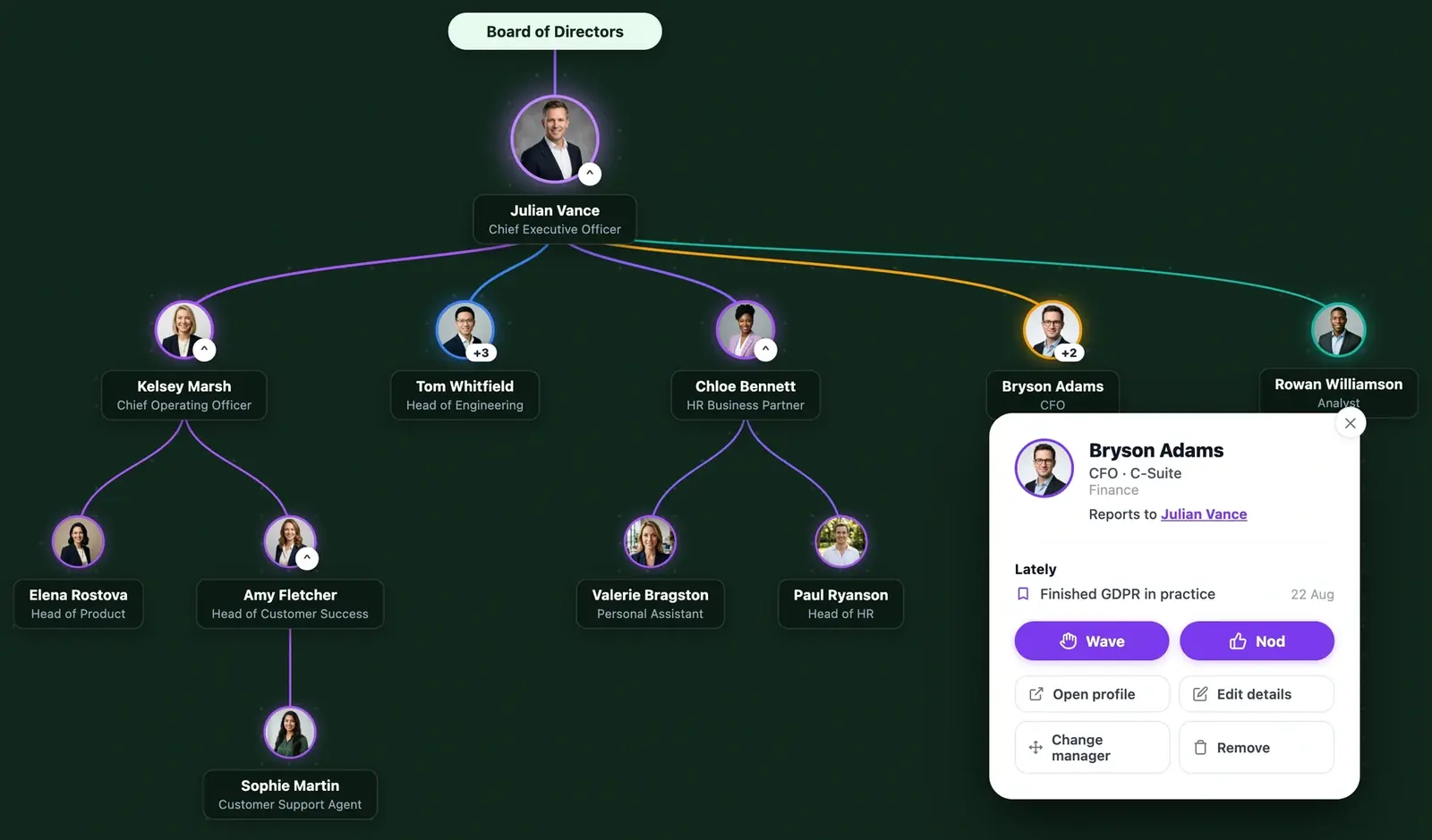
Every person who joins, moves, or leaves updates the chart automatically. No dragging boxes around on a slide when someone changes teams.
Always accurate because nobody maintains it.
This is not a drawing tool. It is your employment records, drawn. Sign an offer letter and the box appears. Move someone to a new manager and the line follows them. Nobody redraws anything.
However your company is actually built.
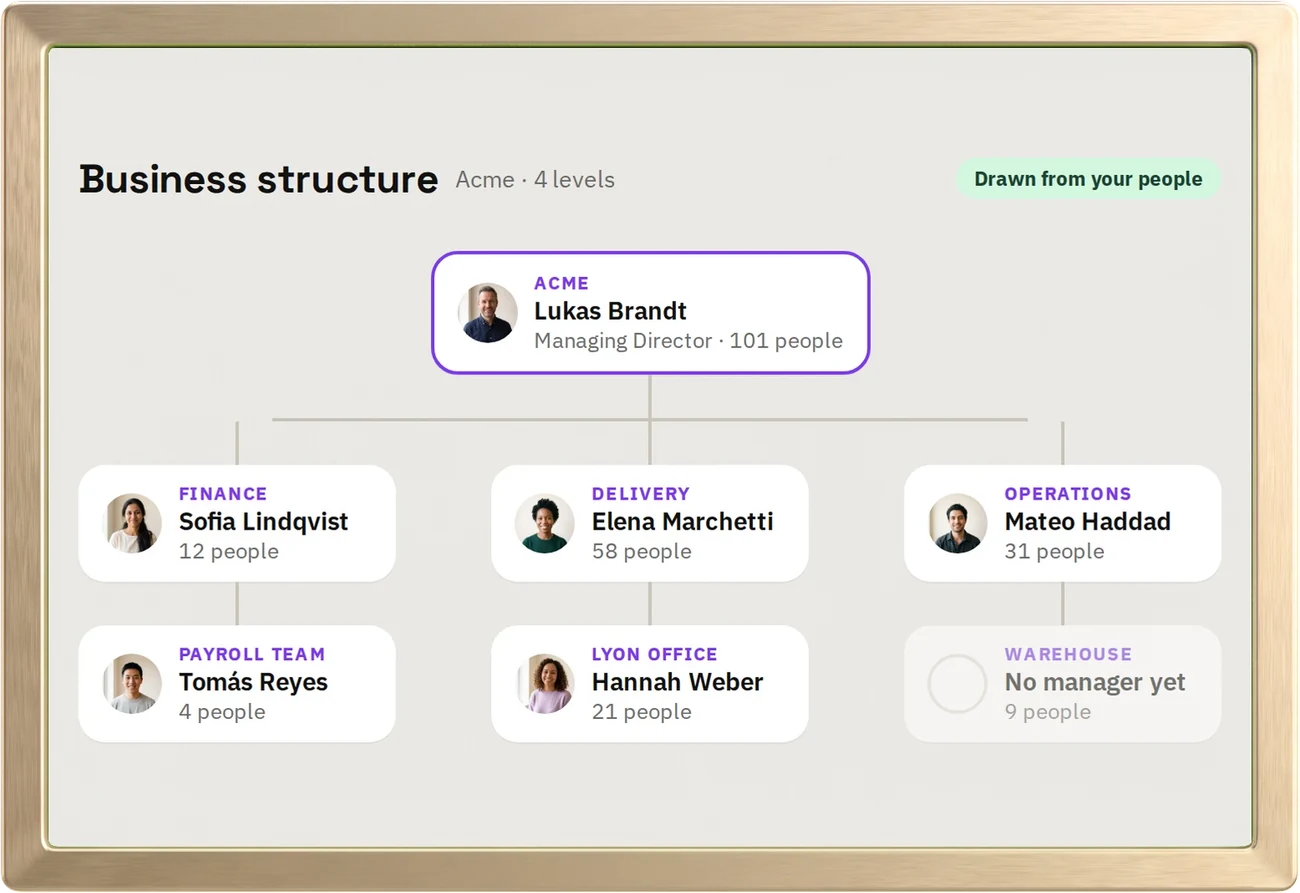
A business is more than a reporting line. Build the real shape of it: units inside units, as many levels deep as you need, named the way your company already names them.
People sit in that structure, so the chart, the approvals and the reports all come out of the same shape. You change it in one place.
An example, not a rule. Use two levels or seven, and call them whatever you call them.
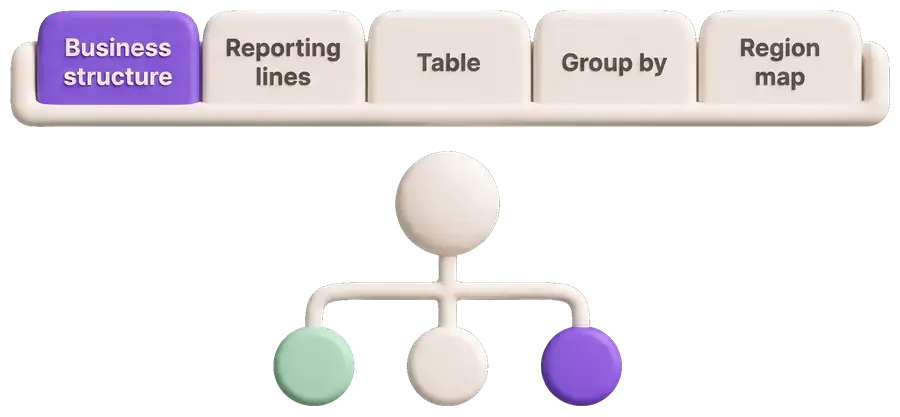
Five ways to look at the same company.
A finance director and a shift manager want different things. One click between them.
Structure
The business itself. Units inside units.
People
Who reports to whom. Click anyone to open them.
Table
Everyone in one list. Compare up to four at once.
Grouped
By department, seniority, site, or anything you track.
Region
Click a place. See who is there.
One AI across all of it, and every module is in every plan.
Drag somebody somewhere else and see what it costs.
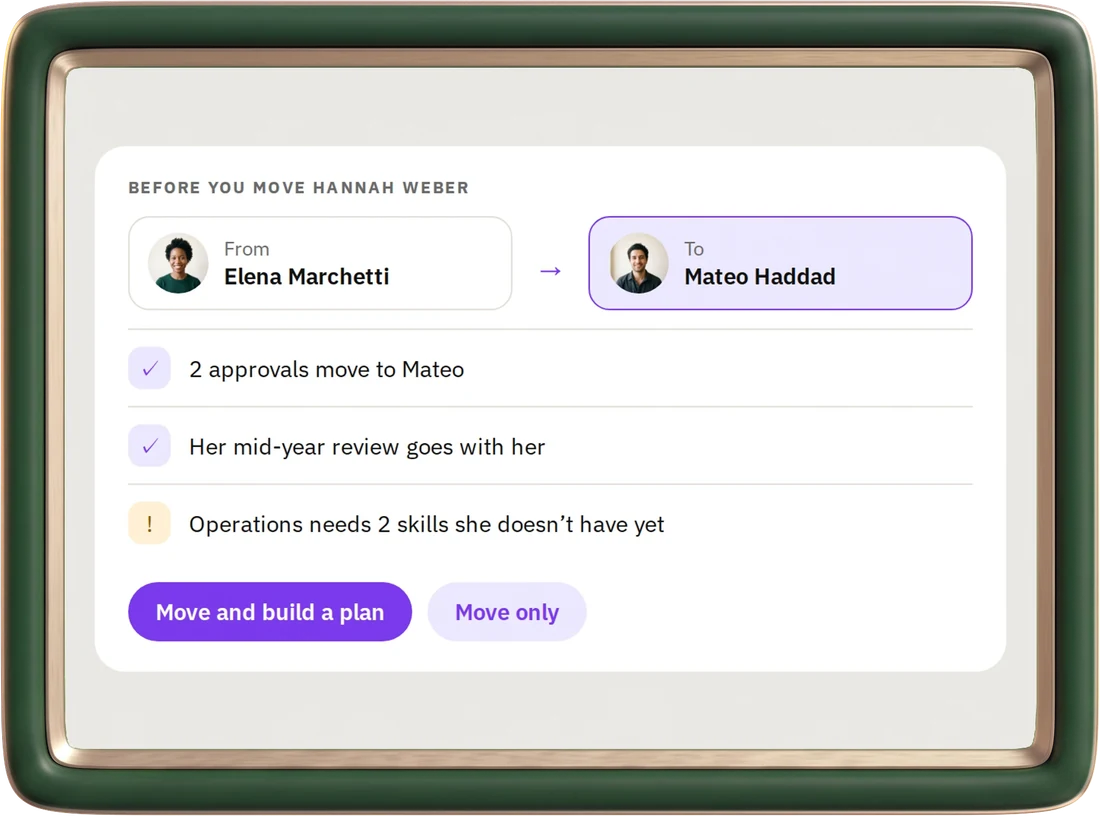
Pick a person up and drop them on a new manager. Nothing has happened yet. A panel opens first and tells you what this move would mean.
Close it and nothing changed. Confirm and it is done, everywhere at once. It will not let you build a reporting loop either.


Everyone sees the chart. Nobody sees what they should not.
The shape of the company is open. Pay and anything private is not, and that is how the data is stored rather than a setting somebody ticked.
Everyone
Names, roles, teams, and who reports to whom.
Line managers
That, plus their own team’s leave, reviews and goals.
You, and admins with pay access
Your pay and bank details. Admins need pay access to see them. Managing you does not open them.
No more “which spreadsheet is right?”
Their contract, their team, their skills, their training, their leave. All of it hangs off the same record, so payroll, reviews and the org chart cannot disagree with each other.
And it all comes back out. Headcount at any level you set up, who sits where, who reports to whom, exported the moment somebody asks.
What they can actually do →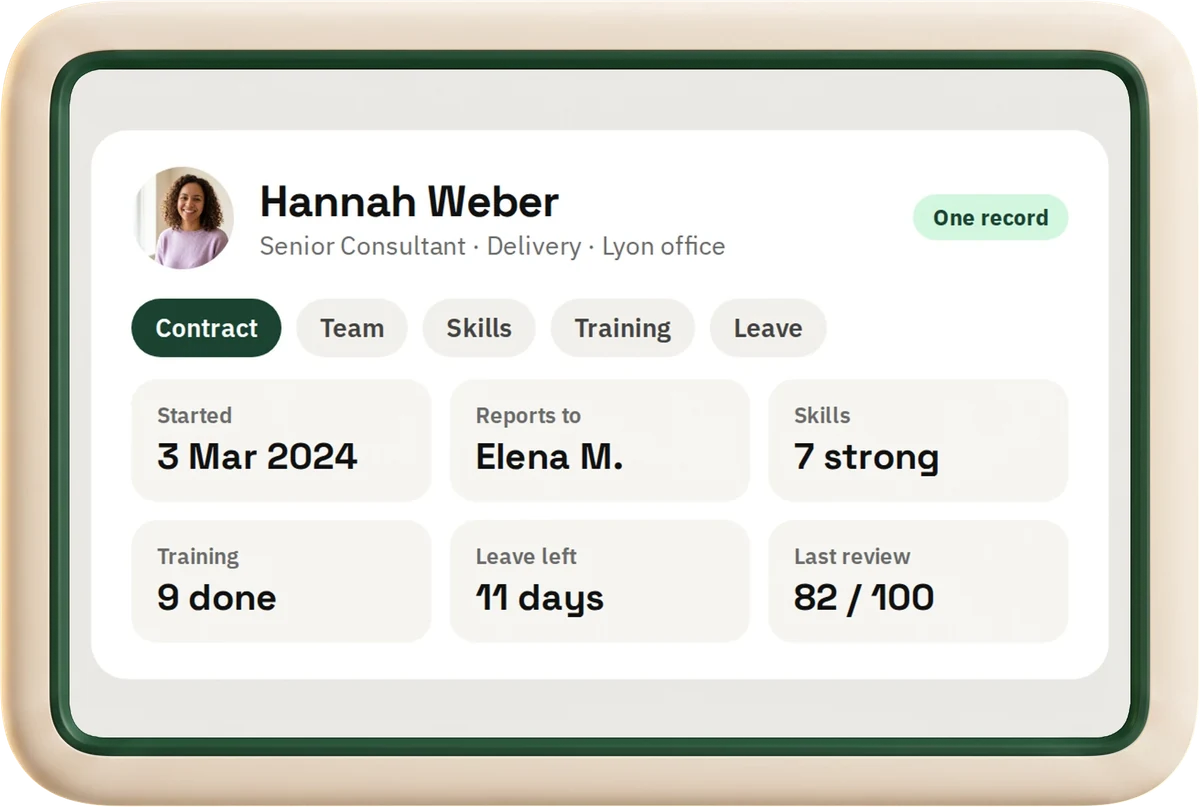
Send one spreadsheet. Watch it draw itself.
A file with a manager email column is all it takes. The chart is there before you have finished making coffee.
Start freeFree forever for 1 admin and 4 more people. No credit card, ever.