
Reviews nobody dreads.
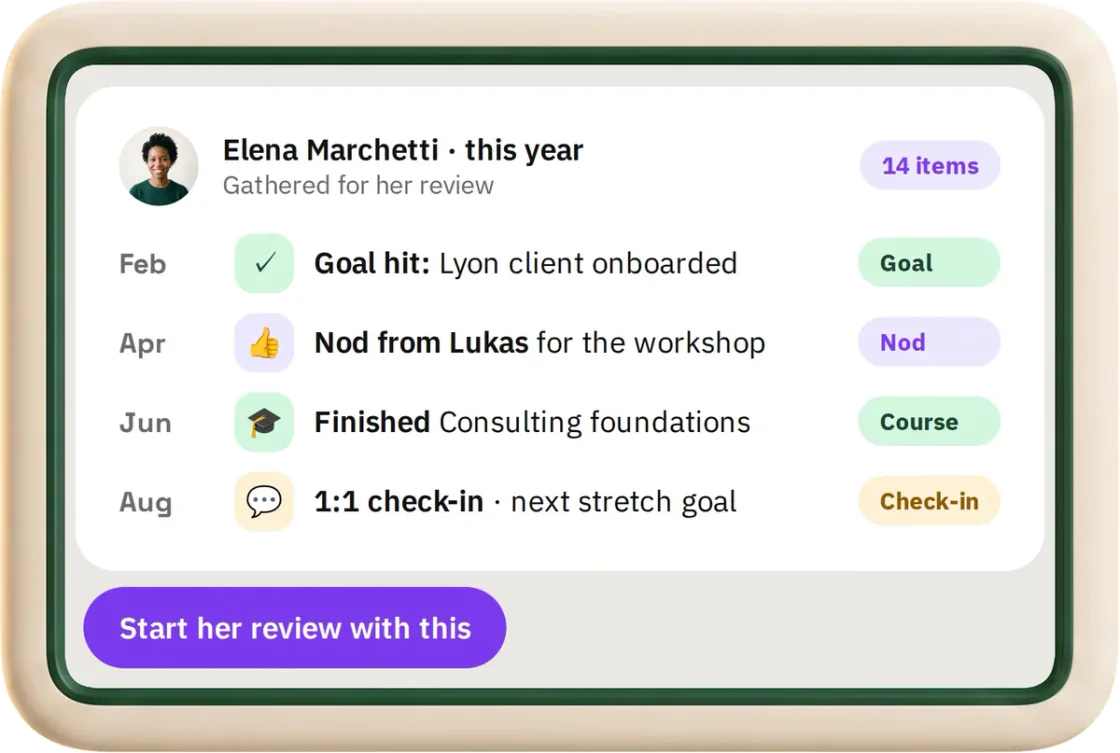
Because the rating comes from what happened all year, not from what anyone can remember on the day.
A review is three steps.
That is the whole shape of it.
- 1
Self-review
The person looks back over their own notes, 1:1 check-ins, and goals from the last 12 months. Nothing starts from a blank page.
- 2
Manager assessment
The manager sees the self-review beside the facts: attendance, feedback from colleagues and project results. Then they write their own view.
- 3
Calibration & sign-off
Department heads calibrate ratings across teams so the soft grader and the tough grader end up on the same scale before numbers lock.
Built from the year's actual work.
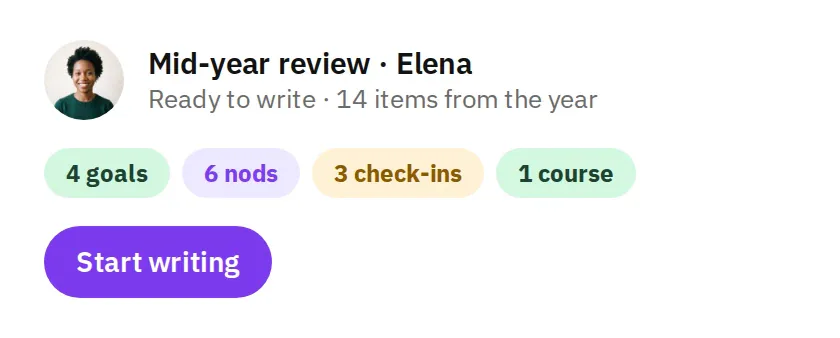
When performance review time arrives, nobody opens a blank text box wondering what happened in March. All the year's work is already sitting in front of both people.
Bi-weekly 1:1 check-ins
Lightweight talking points recorded when they happen, so the end-of-year review is just reading back what you both already agreed.
Live goal progress
Milestones ticked off through the quarters, with target dates and status updates that feed straight into the performance dossier.
Peer shout-outs & feedback
Recognitions given in the Rewards module are visible to the manager during review time, so cross-functional impact does not slip through.
CPD & completed courses
Certifications and learning records from the L&D module attach to the review automatically as proof of skill growth.
One AI across all of it, and every module is in every plan.
Every team on the same tape.
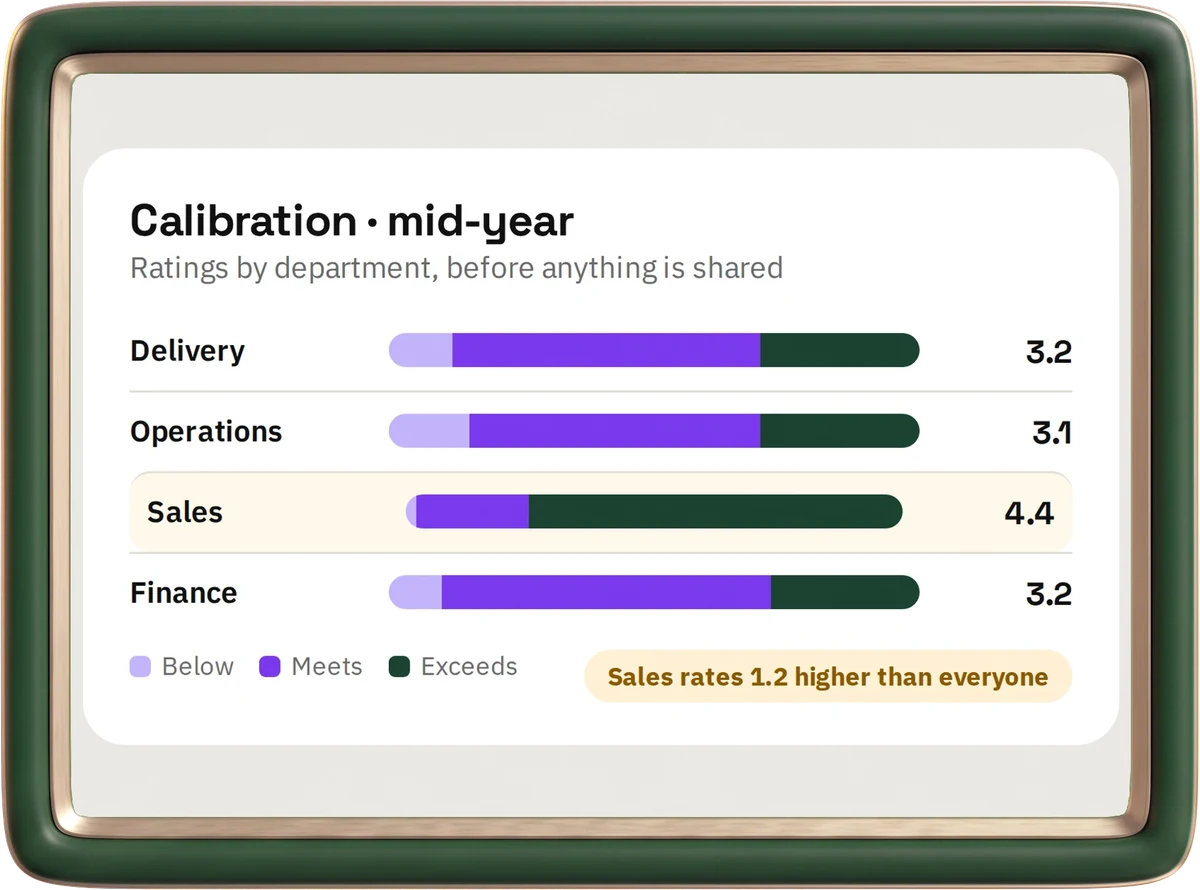
The hardest part of performance reviews is not the conversations. It is making sure an "exceeds" on the engineering team means the same thing as an "exceeds" on customer support.
- Pre-review calibration views show rating distributions across departments before anything is communicated to employees.
- Outlier detection flags managers who grade everyone top-tier or everyone average, keeping standards fair across teams.
- Dual-approval workflow means skip-level managers review ratings before compensation adjustments can be triggered.
- Clear audit trail of every draft, edit, and sign-off timestamped for dispute prevention and compliance.

1:1 notes are private until shared.
Managers and team members have private scratchpads for their regular catch-ups. Notes only become visible to the other person when explicitly shared or converted into review evidence. No surveillance, no surprises.
Where performance leads next.
Calibrated ratings feed directly into the rest of hr goat.
Learning & Development
Turn review outcomes into concrete development plans and course assignments.
ExploreCompensation Intelligence
Tie calibrated performance tiers straight into salary bands and merit increases.
ExploreSuccession Planning
Spot high potentials from calibrated performance ratings and build your bench.
ExploreFair reviews start months before review day.
Give your managers continuous evidence and give your people reviews they can trust.